
Rusk County Projected Versus Actual
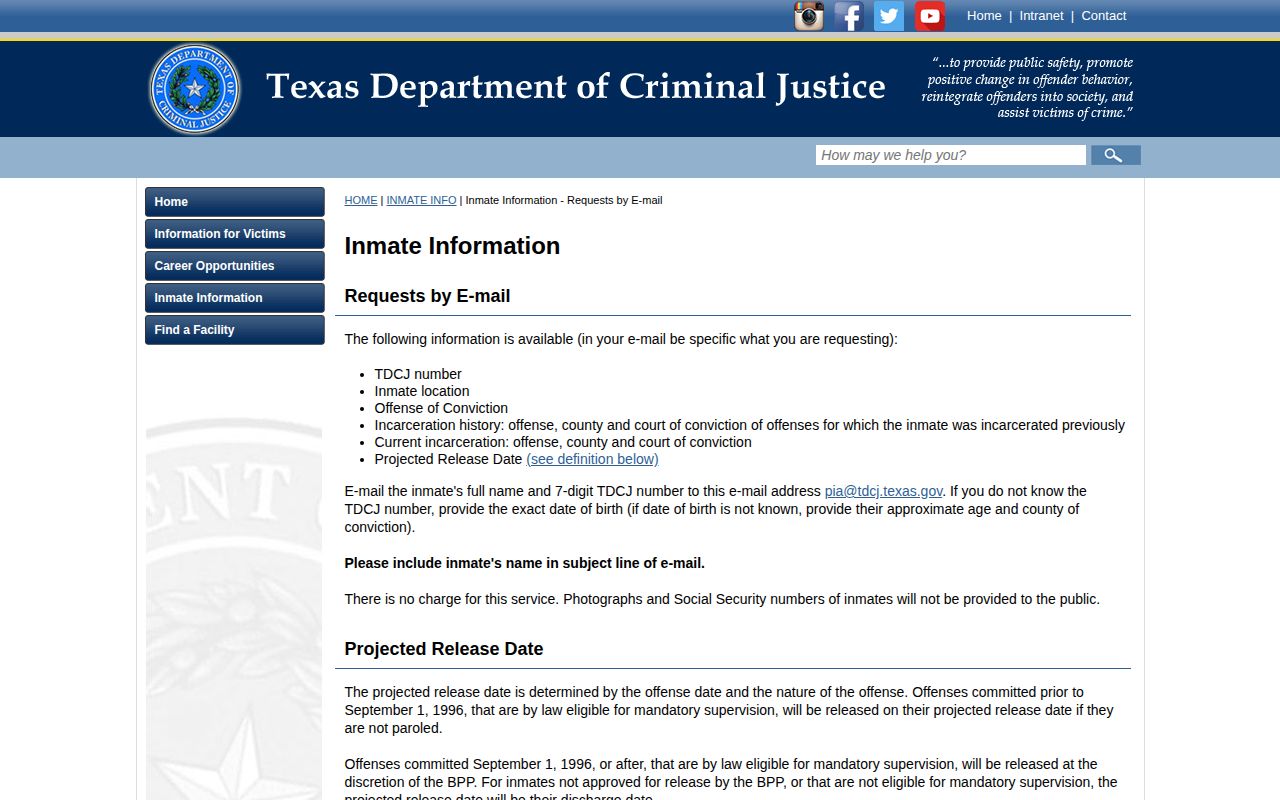
TDCJ defines Projected Release Date as the date determined by its Classification and Records staff on which a person is expected to leave incarceration if not paroled sooner. It is a planning field. During final processing, TDCJ may also display a Scheduled Release Date and Scheduled Release Location. Those fields indicate that release planning has moved farther along, yet TDCJ warns that scheduled information can change without notice, even on the stated day.
Actual release is a completed event. For a state case, the TDCJ history or direct confirmation should show whether the outcome was parole, mandatory supervision, discharge, or transfer. For Rusk County Jail, the booking-out or jail-management record should supply the actual date, time, code, and destination. A person can leave one building and remain in legal custody elsewhere.
A pretrial detainee has no fixed sentence-based date. Release may follow bond, dismissal, a court order, transfer, or later sentencing, and other holds may delay departure. Likewise, a bond amount on InterOp does not prove the bond was posted or every hold cleared.
Find Rusk County Projected Release Dates
Begin with the custody system. The TDCJ Online Inmate Search is the correct path for a person in a Texas prison or state placement. It is not a Rusk County jail archive. County detainees do not receive a TDCJ record merely because they were booked in Henderson.
- Gather the full name and, when possible, the TDCJ or state identification number. A number search reduces false matches.
- Open the TDCJ detail and compare identity, conviction county, offense, sentence, and current location.
- Record the Projected Release Date, parole review information, and any Scheduled Release Date or Location, plus the page's as-of date.
- If the detail is unclear after discharge, use the TDCJ offender-information email service. Ask for release, parole, mandatory-supervision, or discharge status and the effective date.
- For a county sentence, obtain the judgment and jail-credit language, then ask Rusk County Jail for its computation and eventual release record.
The TDCJ email definitions and fallback are shown in the official captured source:
Use Rusk County released inmate records to trace a completed county release and the linked court result. Match each custody episode separately. An earlier release does not prove current freedom after a later booking.
Texas Credits Affect Rusk Releases
Texas Government Code Section 498.003 says good-conduct time affects eligibility for parole or mandatory supervision. It does not otherwise reduce the sentence term, and the credit is a privilege rather than a right. TDCJ class status can support different accrual levels. Credits may also be forfeited. A simple sentence-minus-days calculator cannot reproduce the official projected date.
Texas should not be described as having one universal rule that every state prisoner serves 85 percent. Under Government Code Section 508.145(d), listed offenses and certain deadly-weapon findings require actual calendar time equal to one-half of the sentence or 30 years, whichever is less, before parole eligibility. The minimum in that rule is never less than two calendar years. Other offense and date categories use other formulas, and Section 508.149 addresses mandatory-supervision eligibility and discretionary denial.
Eligibility is not a release promise. BPP may deny or defer release, and an approval may depend on a program or approved plan. County-jail time is different. The judgment controls the term and jail credit, while the sheriff applies lawful local computation. No published Rusk County computation policy supports importing TDCJ class credits into a county sentence.
Why Rusk Release Dates Move
A date may change because the underlying legal or administrative facts change. The displayed field must be read with its as-of date. When sources disagree, contact both custodians and record the conflict instead of choosing the more convenient result.
| Factor | Possible effect | Confirm with |
|---|---|---|
| Good-time loss or class change | Changes eligibility calculations | TDCJ Classification and Records |
| BPP vote or condition | May allow, defer, or condition parole | BPP status and TDCJ detail |
| Detainer or warrant | May route the person to another agency | Holding and receiving agencies |
| Sentence or judgment change | Changes the legal term or credit | Court clerk and TDCJ or jail |
| Program or records audit | Can delay final scheduling | TDCJ release information |
| Transfer | Changes location, not sentence discharge | Receiving locator |
Rusk County has three TDCJ facilities as well as its county jail. A move from James Bradshaw, East Texas Treatment, or Billy Moore may be a transfer, program transition, return to supervision, parole release, or discharge. The county InterOp list does not cover those state facilities.
Confirm Rusk County Release Dates
For a county jail event, IVSS-Counties can provide current notifications when the jail participates and is online. Texas replaced county VINE in 2025, so new users should not follow the old PIN instructions. A delivered alert is useful but informational. Request the Sheriff's permanent booking-out or release entry for durable proof.
For a state prison event, use TDCJ offender information and the separate TDCJ victim-notification system as applicable. Confirm parole supervision through the Tyler District Parole Office. A release certificate or scheduled location is stronger than a projection, but the completed agency history remains the final check.
For Rusk County Jail, call 903-655-3000 or use the Sheriff's records-request form. Ask for the release date and time, release type or code, releasing authority, and transfer destination for one identified booking. Compare the result with the court judgment. Public data can lag or be incomplete, and an arrest is not a conviction.
Rusk County Jail Date Calculations
A county sentence must be traced from the written judgment. Look for the sentence length, date imposed, jail credit, concurrent or consecutive terms, and any order that changes the commitment. The Rusk County Sheriff then processes that legal paperwork and checks other holds. The InterOp field labeled Days In Jail is not a substitute. Released entries have shown numbers that do not track the visible span since arrest, so subtracting that field from the current date can produce a false estimate.
Bond, dismissal, and transfer are not sentence-credit calculations. A person may post bond but remain held on another warrant. A judge may dismiss one charge while another booking basis remains active. A transfer can close the Rusk County episode while the person enters TDCJ, another county, federal, or immigration custody. Ask the jail which release code applied and whether the destination identifies another authority.
Local court processing can separate the legal result from physical departure. Rusk County Court Actions material has warned that a state-jail conviction with county-jail time served may take more time to process through the TDCJ system. Record the court event and gate exit with their own dates. Use the District Clerk for the felony judgment and the Sheriff for the actual jail release time.
Rusk Parole Dates Need Context
Parole eligibility, a favorable BPP vote, and scheduled release are three separate milestones. Eligibility is the first point at which the governing rules permit consideration. A favorable vote can still depend on a treatment program, approved home plan, detainer resolution, or later release certificate. Other action codes may defer review or require service of the full term.
After a certificate, TDCJ audits the record and prepares the scheduled date and location. That is why promising parole information can appear before a firm plan. Check the current TDCJ parole review and release information, then compare it with the offender detail. For supervision after release, Rusk County parole cases route to the Tyler District Parole Office.
Rusk Release Eligibility Context
The offense date and conviction terms matter. Texas eligibility formulas vary by offense class, statutory list, sentence type, and the law in force for the case. A current county booking label is not enough to apply one formula. Obtain the judgment, offense statute, sentence, and any deadly-weapon finding before interpreting an eligibility date. Life sentences and state-jail felonies can follow different rules. Mandatory supervision also has legal ineligibility categories and, for covered cases, a board decision process.
Release location deserves the same care as release date. A scheduled location may be a unit, processing site, or approved release point, while the destination after departure may involve a district parole office or another authority. If a detainer exists, leaving TDCJ may mean transfer rather than return to the community. Confirm the receiving record before calling the event freedom. This distinction is vital in Rusk County, where county jail, state prison, intermediate-sanction, and treatment placements operate in separate systems.