
Rusk County Parole Versus Probation
Parole follows a decision or statutory process involving the Texas Board of Pardons and Paroles, called BPP, and release planning by the Texas Department of Criminal Justice. It permits a person to serve part of a sentence in the community under the TDCJ Parole Division. Mandatory supervision is another TDCJ release form governed by statute and board review. Neither means the sentence vanished. Probation, formally called community supervision in Texas, comes from a trial court. Rusk County Community Supervision and Corrections Department, or CSCD, administers local probation orders.
A blank TDCJ result does not rule out probation. Someone released from Rusk County Jail may have received probation, deferred adjudication, or a court-ordered condition without ever being admitted to a TDCJ prison. The judgment and cause number are key. Conversely, a person released from the James Bradshaw Unit, East Texas Treatment Facility, or Billy Moore Unit should be checked through TDCJ, not the county jail roster.
| Question | Parole or mandatory supervision | Probation |
|---|---|---|
| Who orders or authorizes it? | BPP and the state statutory process | The sentencing court |
| Who supervises it? | TDCJ Parole Division | Rusk County CSCD |
| Best starting record | TDCJ offender detail and parole status | Judgment, docket, and CSCD confirmation |
| Does jail-roster absence prove it? | No | No |
- Parole
- Conditional release from confinement while the sentence remains active.
- Probation
- Court-ordered community supervision, sometimes imposed without a prison term.
- Discharge
- The formal end of the applicable sentence or supervision term.
- Absconder
- A formal agency status for a supervised person alleged to have stopped reporting or left oversight.
Verify Rusk County Release Supervision
Start with identifiers, not a common name alone. Record the full name, date of birth if lawfully available, TDCJ or state identification number, county booking details, and court cause number. Those facts keep separate custody episodes from being merged. The TDCJ offender search can show state-system identity, location, conviction data, projected release information, and parole review information. Its date is not proof that a person physically left confinement.
- Check the related Rusk County court case. Determine whether the order imposed probation, deferred adjudication, prison, jail time, or another result.
- For a prison case, open the TDCJ detail and note the TDCJ number, current location, parole review information, and any scheduled release fields.
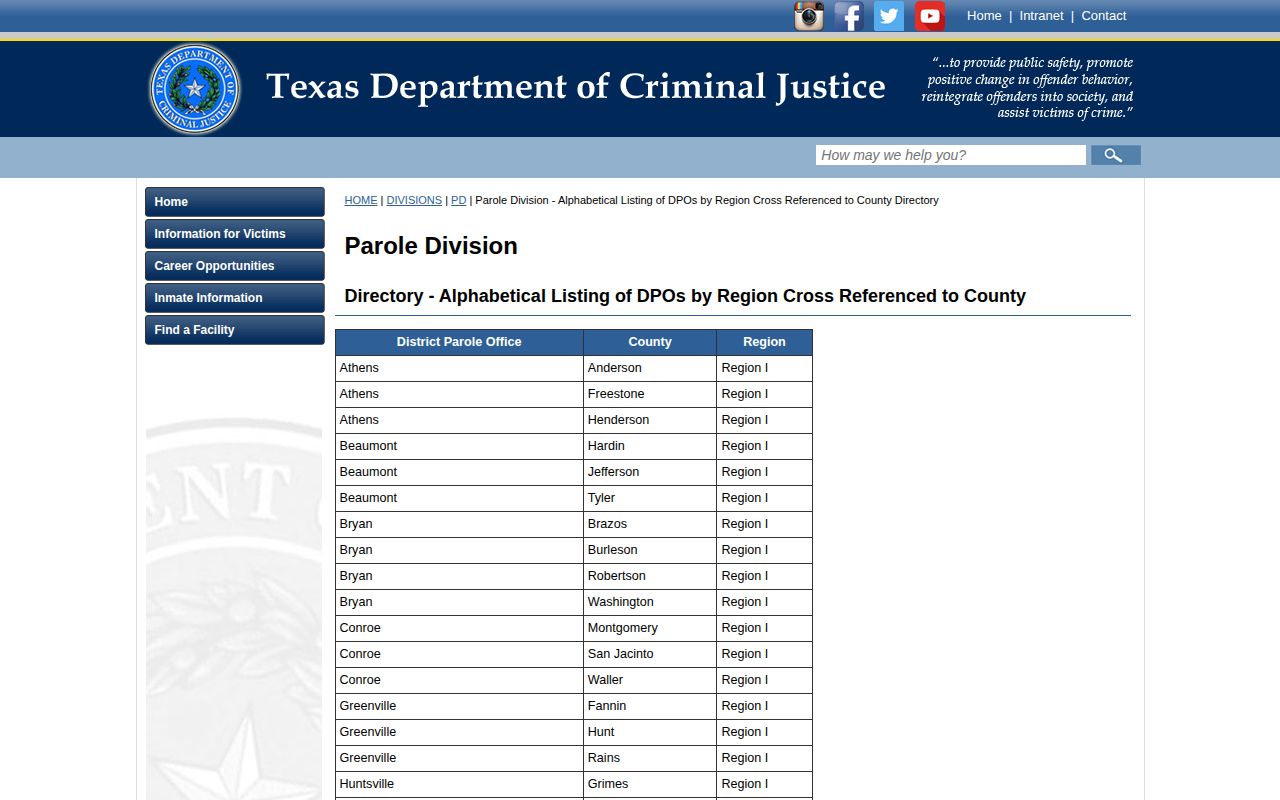
- Use the TDCJ county-to-office directory. It maps Rusk County parole cases to Tyler.
- Ask the correct office whether it is the supervising office and what public status can be confirmed. Do not request protected case-management details.
- For probation, contact Rusk County CSCD with the cause number and compare its answer with the signed court order.
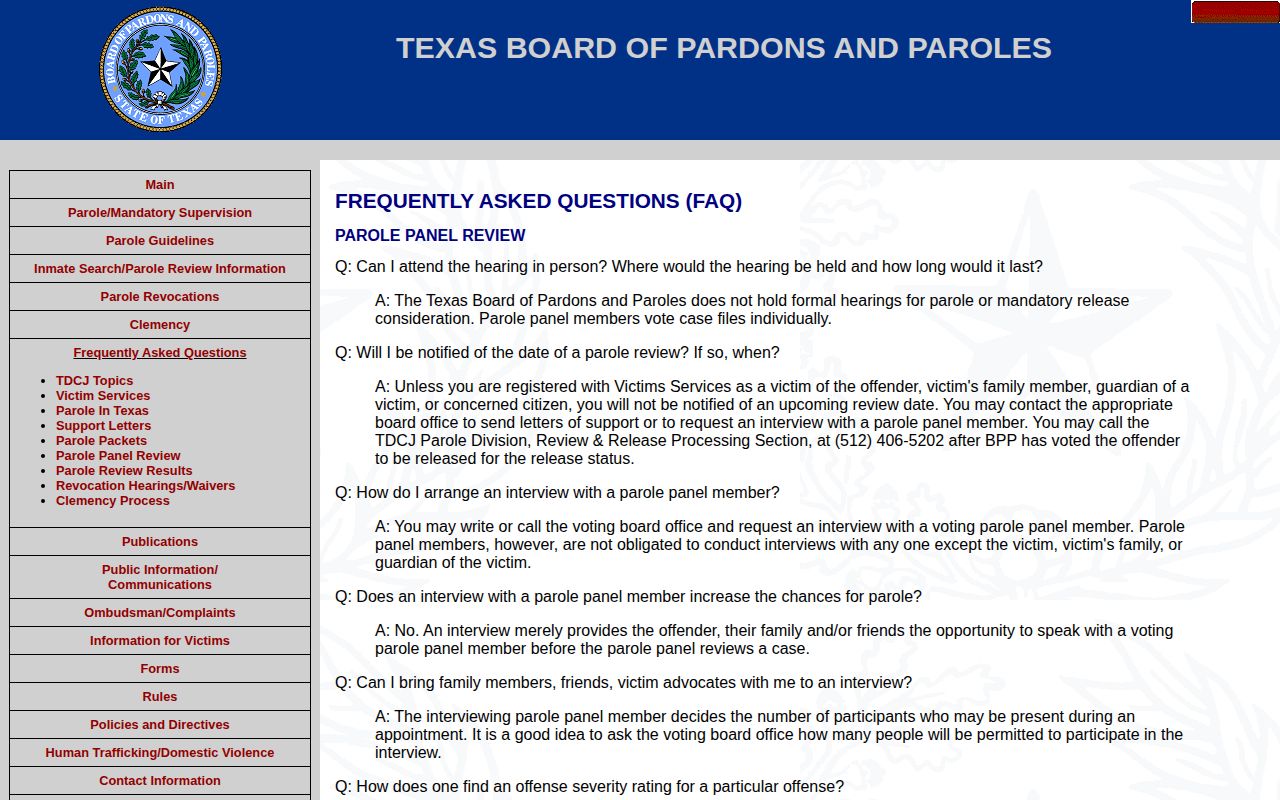
BPP usually decides initial parole through administrative file review, not a public courtroom hearing. A favorable action code may still require a program, approved plan, detainer resolution, release certificate, or records audit. The BPP panel-review explanation shows why an approval and a gate exit should be recorded as separate events.
The official BPP explanation is visible in this captured source:
Rusk County Release Offices
Rusk County has a practical two-office split. Parole and mandatory supervision route through the Tyler District Parole Office. Probation routes through Rusk County CSCD in Henderson. Calling the wrong office can produce a blank answer that is easy to misread as no supervision. The office assignment itself can be checked in the TDCJ cross-reference.
Rusk County Adult Probation / CSCD
101 E. Charlevioux
Henderson, TX 75652-3180
903-657-0362
Fax: 903-657-0387
The TDCJ assignment image provides a useful source check:
Why Rusk Parole Routes Tyler
Rusk County's two-office split determines which record can answer a supervision question. The TDCJ Parole Division assigns parole cases by district office, and its county cross-reference sends Rusk County to Tyler. Rusk County CSCD is tied to local court orders. The offices do not maintain one shared public supervision search. A person can have valid local probation while producing no parole confirmation at Tyler, or have a TDCJ parole case that CSCD cannot verify.
Use the release source to route the inquiry. A TDCJ release certificate, state offender detail, or release from Bradshaw, East Texas Treatment, or Billy Moore points toward the Parole Division. A Rusk County judgment ordering community supervision points toward CSCD and the court clerk. If the person had both an older TDCJ case and a newer county case, keep the cause numbers and dates separate. The Rusk County resource directory confirms local contacts, but the signed judgment and state record remain the best case-specific proof.
Rusk County Supervision Status Changes
Conditions can include reporting, travel limits, program participation, fees, testing, or other terms in the release certificate or court order. The exact terms are case-specific. Public records often do not expose the full supervision file. A missed appointment, an unanswered phone, or a person's absence from a known address does not by itself establish a violation, warrant, or absconder designation.
Only an authorized agency or court can establish those statuses. An alleged parole violation may lead to an administrative revocation process. Outcomes can include continued supervision with sanctions, placement in an intermediate sanction or treatment facility, or revocation and return to prison. This helps explain why someone who had been released can later appear at Bradshaw or East Texas Treatment without a new county conviction. Physical placement and legal supervision status are distinct.
TDCJ IVSS may provide eligible release or supervision notifications. County events use the separate IVSS-Counties portal. Alerts are timely information, not formal discharge papers. Confirm a change through TDCJ, the supervising office, or the court.
Rusk County Supervision Discharge
Supervision ends through a formal agency or court event. For parole or mandatory supervision, request the effective discharge status and date from TDCJ when the online detail is unclear. For probation, use the court docket and signed order discharging or terminating community supervision. A jail release label cannot establish either result. It speaks only to the displayed county booking episode.
Texas public-record access is governed by Government Code Chapter 552, subject to confidentiality rules and redaction. Ask narrowly for an existing status or discharge record, identify the person and cause or TDCJ number, and accept an electronic copy. Protected supervision notes may remain withheld even when the court judgment or basic status is public.
A discharge should be matched to the exact supervision term. One cause may end while another remains open, and completion of a treatment or intermediate-sanction placement may return a person to supervision rather than end it. Ask whether the date applies to parole, mandatory supervision, or a named probation cause. Preserve the written agency response or court order. If the result conflicts with a newer warrant or custody record, contact both offices and report the conflict instead of treating either record as silently controlling.
The full county release path, including the jail release record and court disposition, begins at Rusk County released inmates. Keep the source date with each result because custody and supervision can change later. An arrest is not a conviction, and no record should be used to harass or threaten anyone.